About
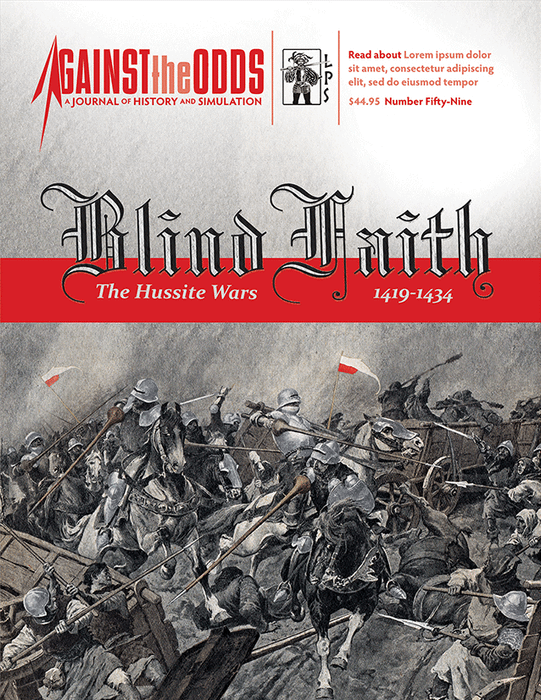
In A.D. 1415, at the Council of Constance, Jan Hus and Jerome of Prague, two church reformers from Bohemia, were burnt at the stake for heresy. In the years that followed, outrage over the execution convulsed civil society in Bohemia, a fief of the Holy Roman Empire. Now, with Bohemia in rebellion as well as consumed by heresy, the Emperor Sigismund must wage war to both extirpate the heresy and secure his throne.
The Hussite player's forces are largely Bohemians (i.e. Czech) and others, who, inspired by the teachings of Jan Hus, supported the taking of Communion with both bread and wine, along with other reforms of the Roman Catholic Church. The Hussites are in turn divided into two to three factions: the Calixtenes (Moderates), the Taborites (Radicals), and a later splinter group called Orphans. The Imperial player controls those forces under the Emperor and King, Sigismund of Luxembourg. Royal Crusaders, including both the Catholic minority in Bohemia and the Kingdom of Hungary are also under the direct control of the Imperial player. Papal Crusaders from the Holy Roman Empire (i.e. Germany) are under the indirect control of the Imperial player.
The Imperial player must destroy the heretics and retake Bohemia before the Pope is forced to make concessions in another church council. The Hussite player, led by the gifted military leader, Jan Zizka, must prevent this and try to begin a Reformation in Europe one hundred years early.
Blind Faith: The Hussite Wars 1419-1434 depicts a classic example of asymmetric warfare, granting both players many options in waging war. The resources and position of the Imperial side are pitted against the skill and morale of the Hussite side. Storming and besieging towns become part of players' strategies for loot and victory.
Each hex on the map represents 25km. Mounted units represent 200 to 500 troops and foot units represent 500 to 1,000 men. Wagon units represent 20 to 30 wagons with a full complement of foot and artillery. One turn represents one year’s worth of campaigning.
Published in Against the Odds #59.
—description from the publisher
2
Players
300 min
Play Time
3.0
Medium-Heavy
14+
Age
Mechanics
Categories
More by Jason Juneau
Similar Games


Reviews
💬
No reviews yet
Be the first to share your thoughts