About
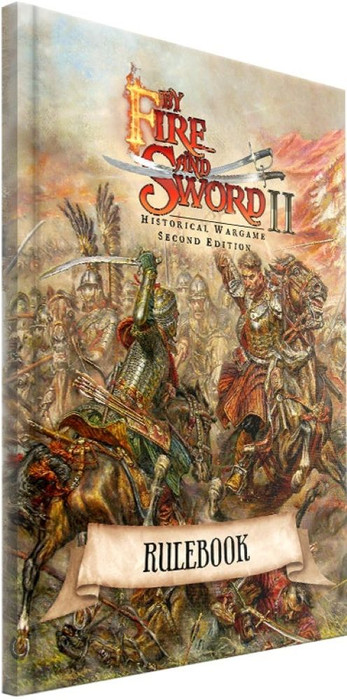
By Fire and Sword - is a realistic, playable and very dynamic wargame which recreates the numerous wars fought by in the Central and Eastern Europes during the second part of 17th century.
Since its release (in 2011), we have supported it with many publications (both printed and and provided as free pdfs) and hundreds of miniature and terrain sets. We organized tournaments, including the International Championship in Warsaw gathering participants from many countries.
After 12 years, we decided that both the game and you, the players, deserve a new edition. Faster, more dynamic, but also easier to learn. And, of course, new models too.
There are few unique things to By Fire and Sword rules:
Orders system
In wargames by nature, the player looking down at the table has a better view of the situation than any 17th century commander could have, having almost all the information about the position and effectiveness of both theirs troops and of their opponent’s. By Fire and Sword attempts to limit this advantage by using an Order system. The Orders given to the Units determine the attitude of the Unit and the type of action it is prepared to take, based on recent instructions received from the army command. Some units, due to their specificity or the talent of their officers, may display greater flexibility, which represents the possibility of changing the order on their own, but as a rule, to change an order, the action of a well-placed commander is required. The average unit, after being ordered to defend a specific position, will remain in place until given new Orders or are pushed out of their position. Commanders can also issue orders within a limited range, which represents the logistical constraints of communicating with messengers, sound signals, and banners.
Key role of commanders
It's the consequence of the Orders system. The commander in By Fire and Sword is not a powerful wizard or an invincible hero cutting down the ranks of enemies, but the brain of the army. Skillful use of the commander, his placement on the battlefield and management of Command Points will be crucial to victory. After all, Napoleon said that an army of sheeps commanded by a lion is stronger than an army of lions commanded by a sheep....
Possibility to play armies of different strength
Wargames in almost 100% assume playing with armies of the same point value. The mechanic of By Fire and Sword allows you to play battles when one side has a significant advantage in the number and/or quality of troops. A system of scenarios, stratagems and random effects allows you to offset your opponent's advantage and give you an equal chances for win, even if your army is significantly weaker than your opponent's.
Reconnaissance
A unique element of the game's mechanics is Reconnaissance. This is the phase of the game (actually pre-game) during which players try to gain advantages by sending their Vanguard on reconnaissance. However, this should be well thought out, the Vanguard can suffer heavy losses during reconnaissance - optimal risk management will be the key.
Alternate activation
Sure that's not very unique in the wargaming world in general, but the I-GO-YOU-GO approach is still dominant in historical wargaming. Instead of this somewhat archaic approach, in which a player takes action with his entire army and then the opponent does the same, with our new approach players alternate moving individual elements of their armies. With this solution, players must constantly keep track of the dynamically changing situation on the table and make quick decisions.
—description from the publisher
2-6
Players
N/A
Complexity
12+
Age
Mechanics
Categories
Similar Games

Reviews
💬
No reviews yet
Be the first to share your thoughts