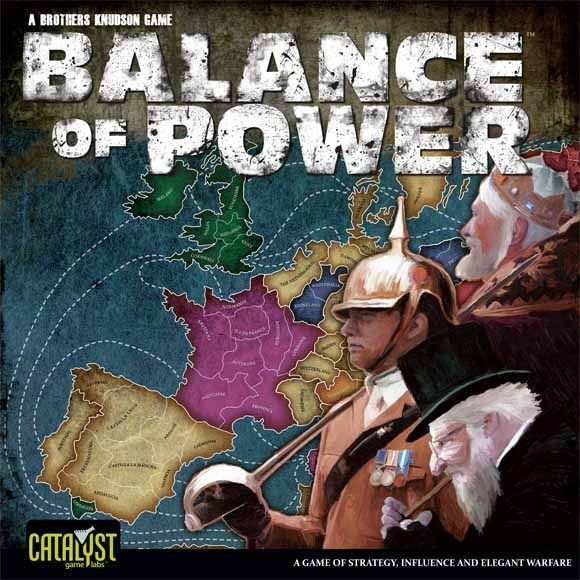
Balance of Power
1979
BGG Geek Rating
5.5
based on 41 ratings
BGG Average Rating
5.8
community average
BGG Ranking
#22906
all board games
Login to vote on your own rating
Players
2-2
Weight
1.00/5.00
Playtime
30 min
Age
10+
⚙️ Game Mechanics
How this game works - core systems and player actions
📂 Categories
📖 About This Game
Balance of Power is a two-player abstract strategy game of movement, momentum, and mechanical tension. Players race their discs across nine parallel seesaws, attempting to tip five of them in their favor by manipulating the balance of weight on each arm.
Each seesaw (or "scale") consists of six positions—three on each player's side of the central pivot. A piece’s influence is determined by its distance from the fulcrum: pieces farther from the center exert more force, while closer pieces provide subtle counterbalance. A single piece on the outermost position can outweigh two or more opponent pieces placed nearer the middle.
On your turn, you roll a die and choose one of your nine discs to either enter the board or advance along the connected path of seesaws. Movement follows a looping circuit across all nine beams, and your piece must move exactly the number of spaces shown on the die. The placement and timing of each move is key, as tilting one seesaw may destabilize another.
Victory is achieved when you’ve tilted five out of nine beams to your side.
Despite its dice element, the game favors tactical foresight over luck. Players must constantly assess not only where to add weight, but how each move will ripple across the interconnected system. The game’s clever seesaw mechanism and elegant simplicity make it accessible to children, yet subtly strategic for seasoned gamers.
Similar to:
Leverage – A close cousin with deeper positional tactics and a shared emphasis on tipping seesaws through strategic piece placement.
Tilt'n Tumble – A faster, more chaotic game of physical balance where pieces are added to a tilting contraption. Emphasizes suspense and brinksmanship.
Rock Me Archimedes – Two-player balance duel using a physical pivoting board. Simpler in rules, but shares the core mechanic of managing weight and distance.